Sunday, December 16, 2012

Twelve Days of Cooking: Day 4

Hey! Today is the fourth day of the Twelve Days of Cooking! Today’s post will be a lot more exciting than yesterday’s. It’s about muffins! And who doesn’t love muffins?
           
            Yesterday, my friend and I made country pear muffins. The recipe is from Eat Fresh Food by Rozanne Gold. I had to bring a dish made of local ingredients to my Girl Scout meeting, so I brought the muffins. The muffins were cooked with local eggs, pears, and baking powder.  They turned out so well that I splurged and ate about… 4? 5? 6? I don’t remember anymore… PLEASE do not follow my example! I was a bad child! ;)
            I noticed that pretty much all of the dishes that were brought to the meeting had apples as the local ingredient. Then, we discussed some of the seasonal produce we can buy at different times of the year. Even I, the food geek, didn’t know exactly which vegetables are in season during the early spring! It occurred to me that when people think of the seasons, they think of one or two fruits and aren’t really sure about the rest. (This is a general statement, of course.) I urge you to look at the Pacific Northwest growing seasons chart I posted a couple days ago to learn about which fruits and vegetables are in season! I also recommend that you save that link somewhere, for it’ll be really useful if you try gardening in the spring and summer. It’s also good to know which foods are locally grown when it comes to meal planning. If you know a few vegetables and fruits that are in season during a particular month, you can plan meals that use these seasonal ingredients!
            I am so excited for Christmas!!! There are only nine days left (probably eight for you, since I’m posting this so late at night and you’ll probably reading this on the 17th) until Christmas and I can’t wait. Before making muffins, my friend and I went Christmas shopping and had so much fun! We got my cousin a little gift and tried on clothes at BP. One of the jackets we found looked like a quilt… good times.
            Please follow this blog, subscribe to me on YouTube, follow me on Twitter and email me! All my information is in the sidebar. Also, remember to vote on the poll – there are just a couple days left! Based on the current results, I started planning a holiday duet with my friend Connor. We’ll hopefully be able to find a time to rehearse it before, after or during rehearsal for Aladdin. If it doesn’t get posted, then at least we tried!  I’d love to hear more suggestions of something fun and non-food-related that I could post for the Twelve Days of Cooking. Comment your thoughts below! Stay healthy and happy holidays!

Saturday, December 15, 2012

Twelve Days of Cooking: Day 3

                  Hey! Today is the third day of the Twelve Days of Cooking! Today's post will be short, as I was running errands all day today and wasn't able to actually cook anything, but I did take a trip to Whole Foods.

                  I'm making apple-pear muffins for my Girl Scout meeting tomorrow. We're completing a journey - a series of activities that we're required to complete before we start our Gold Awards - about food, and everyone is supposed to bring a dish created with local ingredients. I found a tasty-looking recipe for apple-pear muffins in Eat Fresh Food by Rozanne Gold (one of my favorite cookbooks). Tonight, my friend and I are going to bake the muffins and then on Sunday I'll bring them to my meeting.

                  Whole Foods is a great place to find local ingredients. Not only did I find locally grown Gala apples and D'anjou pears on sale, but I found a bunch of other locally grown fruits and veggies. Among these were enormous golden beets and a beautiful vegetable that I had never heard of called a scarlet root. I saw others, but I can't remember what they were. Still, there were lots of interesting and delicious choices. The employees at Whole Foods are super nice and will be willing to give you samples, tell you about the local farms their produce is from and more.

                  I'm sorry that today's post wasn't especially exciting; I didn't have much time today to do anything interesting or post something worthwhile. Tomorrow, however, I'll post about the muffins and our Girl Scout meeting! Please subscribe to this blog, follow me on Twitter, subscribe to me on YouTube and email me! All my info is in the sidebar. Stay healthy and happy holidays!

Friday, December 14, 2012

Twelve Days of Cooking: Day 2

         Hey! Today is the second day of the Twelve Days of Cooking! Today’s post is all about healthy holiday snacks.         

         During the wintertime, there aren’t very many fruits and vegetables grown locally. This means there are fewer options for snacking. Yes, you could eat processed and packaged food, but that’s not very healthy. We need to eat our daily servings of fruits and vegetables, and snacking on them is a great way to meet our requirements. When there aren’t many options for fruits and vegetables to eat, what do you do?

            Most people buy non-local produce during the wintertime. However, as I explained in yesterday’s post, local foods are better for the environment and the food system. We should definitely be snacking on local foods instead of fruits and vegetables grown thousands of miles away from home. By only purchasing local fruits and vegetables, we barely have any snacking options. So what should we snack on during the holidays? My favorite holiday snacks are frozen fruit. It might sound weird to eat frozen fruit plain, but it’s actually delicious.


I love frozen blueberries. I eat a small bowl of them every day when I get home from school. I like frozen blueberries much better than fresh ones, and I don’t really know why. They’re both delicious, but frozen blueberries are better. Even though blueberries can’t grow in December in Washington (or most places, for that matter), they can still be a local snack. This is because a lot of local farms grow blueberries during the summer, pick them at their peak of perfection, freeze them and sell them. In the Pacific Northwest, companies like Remlinger Farms (located in Carnation, WA) and LaPierre Organics (located somewhere in WA) sell amazing frozen blueberries for great prices. I’ve been able to find local frozen blueberries at QFC, Whole Foods and PCC. I haven’t checked other stores, but I’m sure they have them.

           
            Another great frozen snack is frozen peaches. These aren’t something to eat straight out of the bag, but you can thaw them and make creative comfort foods with them. For example, you could thaw the peaches and cook them with a bit of honey and cinnamon until warm. You could eat this plain, add thawed and heated frozen blueberries, serve it over ice cream on Christmas (you deserve to splurge and eat ice cream on Christmas), etc. Frozen peaches are another local item; Remlinger Farms sells frozen peaches. There are other types of frozen fruits that you can find in your local grocery store to snack on. Be creative with the tools you have and the foods you find!

             
           Enough talk about frozen fruits. What are some other snack ideas? Nuts are a fantastic, healthy holiday snack! Nuts have lots of protein and healthy fats in them that our bodies need. My favorite kind of nut to eat around the holidays is hazelnuts. The hazelnuts that we have in my house are from Oregon, which is pretty close to being local. Nuts keep for a long time, so you don't have to worry about the seasons with them. If you do some digging, I'm sure you can find out where the nuts were grown and packaged. Remember to buy dry roasted (salted or unsalted) nuts; this means they aren't roasted with any oil. The oil that regular roasted nut are cooked with adds bad fats to your snack, and you want to try and avoid that.

            Thanks so much for reading this post! Please subscribe to this blog, follow me on Twitter, subscribe to me on YouTube, comment on this post and email me! All of my contact info is on the right-hand side of this site. Also, please vote on the poll. I need ideas on what to post next! Stay healthy and happy holidays!

Thursday, December 13, 2012

Twelve Days of Cooking: Day 1


Hey! As promised, here’s Thursday’s post. There will be a post every Thursday after this… but this week is special. I’m starting a series of posts called the Twelve Days of Cooking. In the twelve days leading up to Christmas, I will post every day about something that I or someone else cooked. Hopefully these posts will help you find holiday recipes and get in the holiday spirit!


            We all hear that it’s important to purchase local foods… but why? First of all, it’s much better for the environment to purchase local foods. It takes much less fuel for a vehicle full of food to travel 100 miles or less than to travel thousands of miles. By buying local, we can reduce the amount of pollution being released into the air. Secondly, the food system greatly benefits when you support local companies. Almost all local companies are relatively small, whereas a lot of the food that most Americans consume is produced far away in a massive factory with low quality ingredients. By supporting local companies, you are voting for (most likely) higher quality food and small businesses. If you want to read more about local foods, you can read a blog post of mine from about a year and a half ago about the subject! http://foodforteensbyteens.blogspot.com/2011/03/local-or-global.html

            In the fall and winter in Washington State, most people don’t buy very much local food at all. This is because a lot of people think that the only local produce we can buy is apples and pears. However, we have many more options; still not as many, but we have more than we think. As consumers, we need to learn what the growing seasons of the region we live in are. While the supermarket doesn’t necessarily follow the seasons, nature still does. If you buy something that isn’t in season, then it definitely isn’t local. Take a look at the following chart of Pacific Northwest growing seasons. Keep in mind that fruits and vegetables that grow until November can be stored and sold through December. If you don’t live in the Pacific Northwest, I’m sure you can find a growing seasons chart for the area you live in. http://www.jessiebunning.com/2011/10/04/pacific-northwest-growing-chart/

            I found a recipe on Food Network last night that gives you an opportunity to cook with local ingredients for the holidays. It’s an Anne Burrell recipe for roasted vegetables. The squash and mushrooms are the two locally grown ingredients you need. While this recipe also uses non-local ingredients, it uses some, which is a start. See if you can find a recipe (on Food Network or elsewhere) that uses almost all local, seasonal ingredients! If you do, I encourage you to comment on this post, email me or tweet me the link. My contact information is on the right-hand side of the site. http://www.foodnetwork.com/recipes/anne-burrell/roasted-kabocha-squash-haricots-verts-mushrooms-and-pepitas-recipe/index.html

            Please follow this blog, subscribe to my YouTube channel, follow me on Twitter and email me! I want to expand my network of followers, so I’d really appreciate it if you’d support me and tell your friends. I also want to open up some conversation in the comments of this post. Comment your favorite local foods, favorite holiday recipes, ask questions, tell me what to post in the upcoming Twelve Days of Cooking posts, etc. I will definitely respond to anything you post. Be sure to come back here tomorrow for Day 2 of the Twelve Days of Cooking! Stay healthy!


Thursday, December 6, 2012

False Advertising


Hey! It has been four and a half months since I’ve posted last… and that’s pretty pathetic. My summer got really busy at the end of July, and then school happened. However, I’m determined to post a lot more often now.

Today's post is about advertising. To make a product more appealing, companies use different advertising techniques. A lot of medicine commercials show people who “used the medicine” and were pleased with its results, but half of the time those people are actors. In some commercials, companies like Verizon Wireless and AT&T will compare the scope of their cell phone service compared to that of other companies. However, many times the graphs and charts they use to compare are disproportionate or don’t use correct intervals. We see stuff like this in commercials of every type…. But what about advertisements for food? Not just advertisements, but the labels that make the food more appealing. Food companies have a plethora of advertising tricks that make their food look healthier and tastier based on the words associated with that food. “Fresh”, “premium” and “all natural” are among these tricks. As a consumer, how can we figure out what the true meanings of these labels are?

You’re watching TV and a Subway commercial comes on. Everyone knows the $5 Foot-long song, and that every Subway commercial ends with their famous slogan of “Subway. Eat fresh.” The whole nation has associated Subway’s food with the word healthy. Yes, Subway does offer nutritional information and has pretty healthy options, but there are also a lot of unhealthy options served at Subway. Why does is the word “fresh” synonymous for “healthy”? Let’s look at the definition of fresh food: food that is not preserved by canning, dehydration, freezing or smoking. Also, something that is considered fresh will not be rotten or expired. So how does this definition match up with what the public thinks about the term “fresh”? My theory is that the reason why so many people think that fresh = healthy is because of fruits and vegetables. Fresh fruits and vegetables that you can buy in the store are packed with nutrients, are (hopefully) not rotting and are the freshest a food could be. Since vegetables and fruits are fresh and healthy, those two words seem like they’d go together. While it is true that a lot of fresh foods are very healthy, there are also lots of fresh foods that are not healthy. Take fresh bread as an example. You can make or buy freshly baked bread, but when it is made solely out of highly processed white flour, it has lost almost all of its nutritional value. What about a fatty steak? It’s fresh, but is it good for you? No. The next time you see the word “fresh” associated with a food product that you are purchasing, read the nutritional information and ingredients. Yes, this item wasn’t frozen or canned with preservatives, but how healthy is it?
 

 “Premium.” We see this word everywhere when walking through the grocery stores. Food companies will use the word “premium” to make their products more attractive. I’ve seen “premium” used a lot for ice cream, dairy products, and store-brand processed snacks. The use of “premium” creates the illusion that the product is of a higher quality than its competitors… but is it? When I Googled “definition of premium food”, “does food need to be certified to be premium” and other keywords similar to that, I didn’t find any helpful results. I just found links of companies that claim to have premium foods. I’m almost positive that USA food companies do not have to be certified premium. Premium is a word that is used whenever to entice consumers, but it doesn’t actually have very much value. That being said, a lot of truly healthy foods are also advertised with “premium” on their packages. We as consumers can learn to ignore the “premium” and learn about the actual quality of the ingredients in our food.  

The term “all natural” is another term that we should sit back and think about. While a food that is all natural doesn’t contain any artificial colors, flavors or preservatives, it isn’t a perfect food. Many people think that if something is all natural, it’s healthy. This isn’t the case. Some types of Lay’s potato chips are all natural, but they have barely any nutritional value. The term “all natural” also made me believe that the dairy used in the products were hormone free, the eggs used came from chickens that were not fed antibiotics and hormones, and that the meat used also followed these guidelines. However, to be all natural, a food just has to be free of artificial colors, flavors and preservatives. While it is much better to eat all natural food than artificial food, it still isn’t perfect. Finally, companies do not need to be certified all natural. A food company could easily be lying about their food being “all natural”. As a consumer, what do you do with this information? When you see that a product is all natural, you’ll know that the company that made that product is making steps into producing better food. However, still check the package for an indication that it is free of hormones and antibiotics (if the product contains meat, dairy or eggs). Check the ingredient list even if it’s an all natural product. Finally, try to buy all natural food from smaller companies that you know use good quality ingredients. Trader Joe’s and Whole Foods are great places to find natural and organic foods with trustworthy ingredients and labels.

I hope you enjoyed my first post in a long time! Again, I’m sorry that I haven’t been keeping up with this blog very well. However, my goal is to post every Thursday from here on out. I also want to try and post a video every month, where that’s a cooking video or just a random video that shows you guys more about who I am and what I like to do other than cook. Plus, I’m going to start a series of special holiday posts called The Twelve Days of Cooking. In the final twelve days leading up to Christmas, I am going to cook something every day, and every day there will be a post about what I made.

As I get into a regular blogging schedule, I will try to make a Teens Can Cook, Too Facebook page. I know that I always find it annoying when my favorite YouTubers don’t post a link to their videos on their Facebook pages, and I feel like I should make my videos and posts easier to find than by digging through Google. For now, I need to get back into blogging regularly.

Thanks for reading this post! Please share my blog on Facebook, Twitter, Google Plus (which no one uses, but whatever) ANYTHING! I’d love to get the word out about improving the food system and educating my generation about the food we eat. Remember to come here on Thursday for the kick-off of The Twelve Days of Cooking. Stay healthy and happy holidays!


Wednesday, July 18, 2012

Health Starts Here Challenge - Day 23 and Cupcakes

Hey everybody! Health Starts Here has been going really well and I've thoroughly enjoyed making dinner every night. It's so fun to play with ingredients, modify old family recipes to make them healthier and share my successes with you all.

On Monday, my friend Juliet (who has appeared in several cooking videos) and I got together to bake Health Starts Here cupcakes! It took us a few weeks of chatting on Facebook and lots of Internet research to finally create a tasty recipe that is free of refined sugars, refined oils, dairy, eggs or refined flours.

To create a recipe for these cupcakes, I went to the Health Starts Here section of the Whole Foods website to see if they had any recipes for cake. I found a recipe there for Banana-Cocoa Snack Cake. I made their recipe at home and it was AMAZING! It was like a cross between banana bread and chocolate cake. It was very dense though. Juliet's and my solution was to cut the amount of oat flour in half so there was 1 cup of whole-wheat pastry flour, 1/2 cup of oat flour and 1/2 cup of brown rice flour. Juliet also isn't the biggest fan of bananas, so we used two bananas instead of four. We added some zucchini and squeezed all the water out of it (although the excess water came in handy when we didn't have enough coconut milk). We added lots of dates and a cup of applesauce to give it some extra sugar. With a few extra modifications, the recipe became our own.

Then there was the frosting. Figuring out what to do for the frosting was quite difficult. We have a lot of vegan cupcake books at my house, but their frostings all use sugar. I was at a loss because there really is no healthy substitution for powdered sugar. I found a frosting recipe from a vegan cookbook (not especially for cupcakes) that is normally used for cake, and it followed the Health Starts Here guidelines! I modified it so that it would become a strawberry frosting and would be sweeter, and it turned out to be delicious. It wasn't quite the consistency of a normal frosting, but when you're working with cashew cream and dates, there's nothing else you can do.

I was pretty worried about these cupcakes being too bitter or just plain disgusting, but they were AMAZING! I normally get freaked out by vegan baked goods - I've tried lots of them and baking with dairy and eggs always tastes better - but these actually tasted normal.

While the frosting has an interesting mauve color, it tasted great!


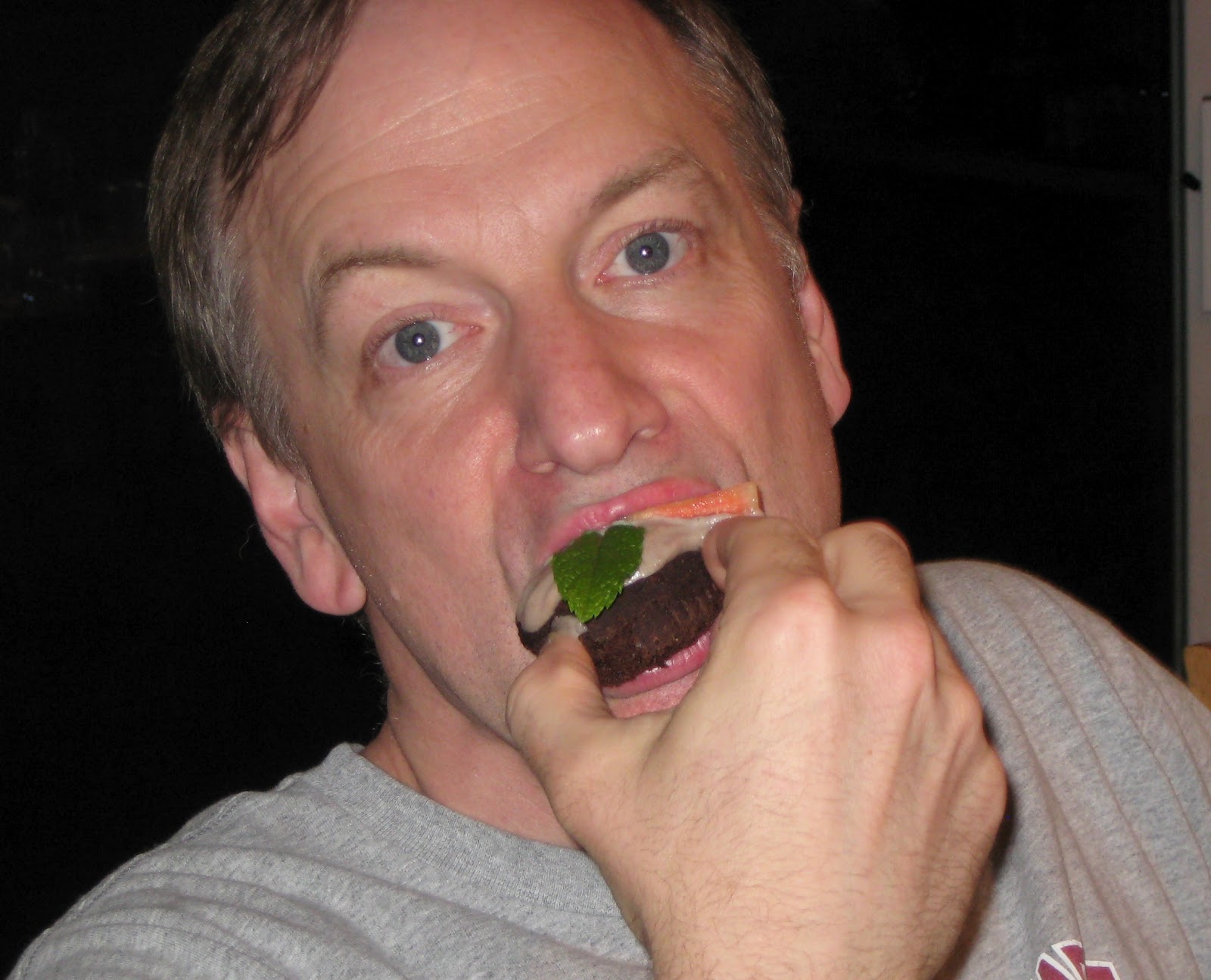
My dad trying the cupcake
Juliet and a cupcake

 I apologize that I can't (more like don't want to) post the cupcake recipe. It will be in my cookbook, though!

Now that the 28-Day Challenge is nearing its close, I've been thinking about how the ideals of Health Starts Here will stick with me. I will be adding dairy, eggs, refined oils, refined sugars and refined flours back into my diet, but in very small quantities. I won't eat Greek yogurt every day anymore like I used to, and my snacks will always be smoothies, whole-grain crackers, fruits and vegetables from here on out. I'll be very cautious about how much oil I'm consuming every day and make sure that I never cook a cream sauce (except for the alfredo made with pureed cauliflower, but that's different) for my family again! I've also decided that I will treat myself to organic ice cream only once a month and a homemade cookie once a month as well. I'll try to incorporate whole grains into my diet whenever I can, but I will allow myself a slice of white artisan bread every once in a while. Everything in moderation, right?
As a kid, what can you do at home to improve your diet? I know I've said lots of things already and you're probably still confused as to what you should do. To start off, pick one thing that you want to change and find a way that you will be successful in changing it. For example, you might want to start eating a better breakfast. This might mean that every Friday you have oatmeal with fruit (or another whole grain option) and that the rest of the days of the week you have what you were used to eating. This might also mean that you completely forget about how you used to eat breakfast and have a healthy option every morning from here on out. You might also decide that you want to start cooking dinner. You could cook three times a week, once a week, once a month, or whatever is the right pace for you. Once you've accomplished your goal, then move onto another thing. Maybe you don't want to change the actual meals you eat, but instead you'd like to buy more high quality products and understand the source of your food. There are so many things you can do to become a more knowledgable consumer. Read through all of my posts and other bloggers' posts about healthy eating and find out what speaks to you based on what you read.

A few readers voted on whether I should change my email address or not. I've decided that after  summer is over, I will be changing my email address to "teenchef" instead of "tweenchef', which has been quite the inaccurate label of my age.

Follow this blog, subscribe to my YouTube channel (http://youtube.com/user/tweenchef123), follow me on Twitter (@MDchef_123), email me at tweenchef123@gmail.com if you have any questions, go to www.wholefoodsmarket.com\healthstartshere to learn more abotu he 28-Day Challenge and tell your friends and family about Teens Can Cook, Too! Stay healthy!

Sunday, July 8, 2012

Health Starts Here - Snacking Tips

Hey everybody! I'm almost halfway through the Health Starts Here 28-Day Challenge and I can't wait to experiment some more in the kitchen with Health Starts Here recipes.

I recently hung out with some friends at a birthday party and we were talking about Health Starts Here. Most of them didn't really understand why I'm doing this or why it even matters. I had an extremely long explanation about making every calorie count, but it didn't really sink in.

When you are thrown a lot of information and all sorts of things, it's difficult to sort out fact and fiction. What I think is that you have to pinpoint the facts you can't argue with and make a change, but do it in steps.

The biggest step for teens in America is to quit snacking on junk food. I have been guilty of this myself (but because I don't eat anything artificial, I ate things like Newman-O's and those Kashi granola bars that have a thick layer of chocolate on top), but I'm committed to snacking on foods that are high in nutritional value now. You may know how to cook or your family may cook many meals, but when it's snacktime, you've got to fend for yourself. Most people walk to the pantry to see what kinds of granola bars, chips, sweets and popcorn to eat. This is exactly what needs to stop.

Think about potato chips. They are fried, so that means there will be a few grams of saturated fat. Potato chips are salty, so now you're eating a large amount of your daily value of salt. Potato chips are very starchy too, but since they don't have very many nutrients (especially when you smother them in oil and salt), those carbs aren't really doing much except giving you a bit of energy until dinner. Are there any vitamins in potato chips? Nope. You may be thinking, "Well that's what vitamin supplements are for!" I take vitamins myself, but most people only take a few specific kinds of vitamins. Vegetables and fruits have all sorts of vitamins and minerals that you probably don't take in your supplement and a lot that you do.

Once you eat those potato chips, you waste some of your calories for the day. Remember that as a growing teen, you body needs enough calories every day; don't undereat or overeat. But because you are growing and developing, those vitamins and minerals count even more.

The simple solution is to eat something high in nutrients. Have fruits and vegetables for snacks. They have lots of phytonutrients (phyto means "plant" and "nutrient" speaks for itself), vitamins, minerals, fiber, water and energy (sustainable carbs). Phytonutrients are created by plants for protection and survival. Phytonutrients also prevent disease and promote health in human bodies.  Instead of having potato chips, you could have 2 fruits for the same amount of calories (if you follow the serving size on the potato chip bag, that is) while eating all of that good stuff that plants give you. Potato chips can't do that.

Another thing about phytonutrients is that the darker and/or richer the color of the fruit/vegetable, the more phytonutrients you'll eat. Instead of constantly eating iceberg lettuce, potatoes and corn to get your veggies for the day, you could eat plums, red chard, nectarines with bright yellow flesh, beautiful bell peppers, red cabbage, dark green kale, bright citrus fruits and rich red tomatoes. Plus, there are so many fruits to choose from that if you get tired of one, there's always going to be another amazing taste to try. The seasons bring in varieties of plants every three months so you won't get bored, too.

I love fruit and vegetables, but sometimes I don't feel like eating that. Whole grains are the perfect snack when you aren't in a fruit/veggie mood. My favorite whole grain snack is a rice cake with all-natural peanut butter (with no added oils; peanuts have so many naturally occuring oils that adding more is unhealthy). Of course, you could make homemade hummus and dip a whole-grain pita in that or make yourself a mini-wrap with a whole-grain tortilla.

Finding a true whole grain product is confusing, and most people don't know exactly what a whole grain is. There are three parts of a grain: the bran (the protective coating, which also contains most of the grain's minerals, including B vitamins and fiber), the endosperm (a concentrated energy source in the middle which contains a lot of the things you'll find on a nutrition label) and the germ (a small core that contains unsaturated fats, antioxidants, phytonutrients, vitamin E and more). When only a certain part of the grain is ground into flour, it is no longer a whole grain and is lacking many nutrients. To supplement for the lost nutrients, most flours are "enriched", meaning that the nutrients that weren't ground in get added back. To determine whether the product you're about to buy is a whole grain product, look for the red flags that tell you that it is a refined flour: bleached flour, unbleached flour, enriched flour and fortified flour. A sign of a whole grain is "cracked", "crushed" or "sprouted". Brands like Ezekiel 4:9 and 365 have a few types of whole-wheat pasta that are whole grain. You can also find lots of whole-grain breads at natural markets, like Dave's Killer Bread and certain types of Rudi's bread.

Information overload! I'll summarize so your brain can calm down. Make every calorie count and think about the vitamin, mineral, fiber, protein, fat, sugar and phytonutrient content of every snack you eat. Instead of going on Health Starts Here tomorrow, try ditching the Doritos for good and eating some fruits and veggies instead. Once that becomes a habit, make another small step towards health.

Ditch these...


And try these!


By the way, I got all of this information from the people at Whole Foods who are helping us out with the 28-Day Challenge. Thanks for all your informative packets and emails!

Please follow this blog, subscribe to my YouTube channel, follow me on Twitter (@MDchef_123), tell everyone you know about what I'm doing and email me if you have any questions, comments or recipes. Stay healthy!


Thursday, July 5, 2012

Health Starts Here Challenge - Day 10

Hey everybody! It's the 10th day of the Health Starts Here 28-Day Challenge and I'm feeling pretty good. It is growing increasingly harder to quell my cravings for dark chocolate, artisan bread and gouda cheese. Thankfully, there is something out there for me that has a similar texture that will satisfy me until the end of the 28 days.

I recently watched the documentary Forks Over Knives. The movie was recommended by the people at Whole Foods who run the 28-Day Challenge. The film is about eating a plant-strong diet instead of the Western diet of animal-based products, which is quite similar to Health Starts Here. The movie was incredible and showed me how important it is to eat your vegetables to avoid problematic/fatal diseases. The term "forks over knives" doesn't mean vegetables and fruits (fork food) over meat (knife food); it rather means that food should be used to reverse and prevent health conditions such as diabetes, cancer, heart disease, high blood pressure and high cholesterol.

Forks Over Knives is an impactful movie for many adults, but for kids, it's different. It's all about the health issues 30-year-olds and over have and how we can reverse them. My take on it is that kids and teens must watch this movie. We may not have to worry about heart attacks and other diseases yet, but we will in just a couple of decades. As a kid or teen, you have time to gradually build a healthy foundation for adulthood. It's never too early to start.

In the movie, the Western diet of animal-based products was often compared to a diet eaten by people in rural areas outside of the country. In those rural areas, they ate more vegetables than in the United States. Their risks for a plethora of diseases were drastically lower than those of people in the United States. The only problem with these studies is that the comparisons were so dramatic. What about people who eat in between the grease-laden Western diet and the vegetable-laden rural diet?

What I take away from the movie is that kids should be eating healthier and consuming their 5-9 servings of vegetables every single day. I'm not going to stay on a completely plant-strong diet, cut refined sugars out of my life forever, modify all my recipes to not have oil, and turn my back on dairy and eggs for good! I'm going to eat how I normally eat with a few changes. Kids and teens need to know and follow the following things:
  • You can eat oil, but be conscious of how much oil you eat every day and remember that every tablespoon of oil is 120 calories.
  • Instead of snacking on cookies (which I often did, only I'd eat the organic kind), snack on a sweet fruit. My favorites are mangoes and nectarines.
  • Learn how to cook so you can have an appreciation for real food and set aside the desire for processed junk.
  • Read the nutrition labels on everything you buy, and start buying more things that don't have nutrition labels (vegetables and fruits don't have nutrition labels - buy more of them).
  • Remember that every 1/2 cup of fruit or vegetable is one serving, and try to imagine how many servings you are eating and how many more you need to eat to get into the 5 - 9 range.
  • You can eat meat, but eat lean meats (chicken, fish, turkey, 15% fat beef, etc.). Make sure that the animal was humanely raised. If you do eat meat, only eat it 3 - 4 times a week.
  • Beans, nuts and tofu have lots of protein! Meat only gives you protein, but these ingredients (especially beans) give you protein and other nutrients that your body needs.
  • Limit your dairy intake. I used to eat lowfat/nonfat Greek yogurt every single day because I thought I'd be getting extra calcium (I tak calcium supplements), but vegetables have just as much - if not more - calcium than dairy. Find out which of your favorite vegetables and fruits have the nutrients you need.
  • Eat whole grains. They contain so much more fiber and nutrients than an enriched white flour. To ensure your whole grain intake, have a variety of grains in your pantry and cook them for breakfast. My favorites are rolled oats, quinoa (sounds weird, but if you put mangoes and vanilla extract in there it's delicious) and millet. Remember that a slice of artisan bread or a homemade cookie every once in a while is not going to kill you!
  • Calorie count a little. As kids and teens, we are still growing and developing, so cutting down on calories is not the objective. By having a rough understanding of how much you are eating, you can make sure that you get your 2,000 calories a day. Girls don't need as many calories as boys do, but you should still keep your weight, age and height in mind when eating.
  • Pack your own school lunch. You can control what goes in your lunch this way and eat something far more nutritious than what your school's reheat kitchen can serve you. Even if your school has a cooking kitchen that serves good food, try to pack your own lunch at least half of the time.
I know that's a lot of information to soak in, and there's a ton more out there. A bunch of different resources tell you to do different things. If you don't do any of this or just do a little bit of it, then pick one thing you'd like to change. Once you've changed and it has become a firm part of your routine, pick another thing and gradually change your habits. Transitions are always easier for kids than gigantic, immediate changes.

My dad found a review on Forks Over Knives that points out the other side to the story. It is quite interesting and shows you that the ideals of a plant-strong diet are still very premature. Because of this review (which is really long, so you don't have to read the whole thing), I realize that eating animal-based products and sugars in moderation is a perfectly acceptable way to go. http://rawfoodsos.com/2011/09/22/forks-over-knives-is-the-science-legit-a-review-and-critique/ You can stream Forks Over Knives on Netflix, watch it on Hulu, or do it the old-fashioned way and actually purchase the DVD. The review of Forks Over Knives will make much more sense if you watch the movie first.

Please follow this blog, subscribe to my YouTube channel (http://youtube.com/tweenchef123), follow me on Twitter (@MDchef_123) and email me if you have questions or would like to share a recipe with me (tweenchef123@gmail.com). Stay healthy!